LOD — Level of Development — is the single biggest lever on both the usefulness and cost of a BIM model. Pick it wisely.
What Is LOD in BIM?
LOD (Level of Development) defines how detailed each element in a BIM model is and how reliable that detail is for downstream use. It’s a shared vocabulary set by the BIM Forum so designers, modellers and contractors can agree what each part of a model can be trusted for. Higher LOD = more time and cost; lower LOD = faster but less reliable.
The LOD Levels
| LOD | What it represents | Best for |
|---|---|---|
| LOD 100 | Symbolic / massing — approximate shape and size. | Early concept, cost order-of-magnitude. |
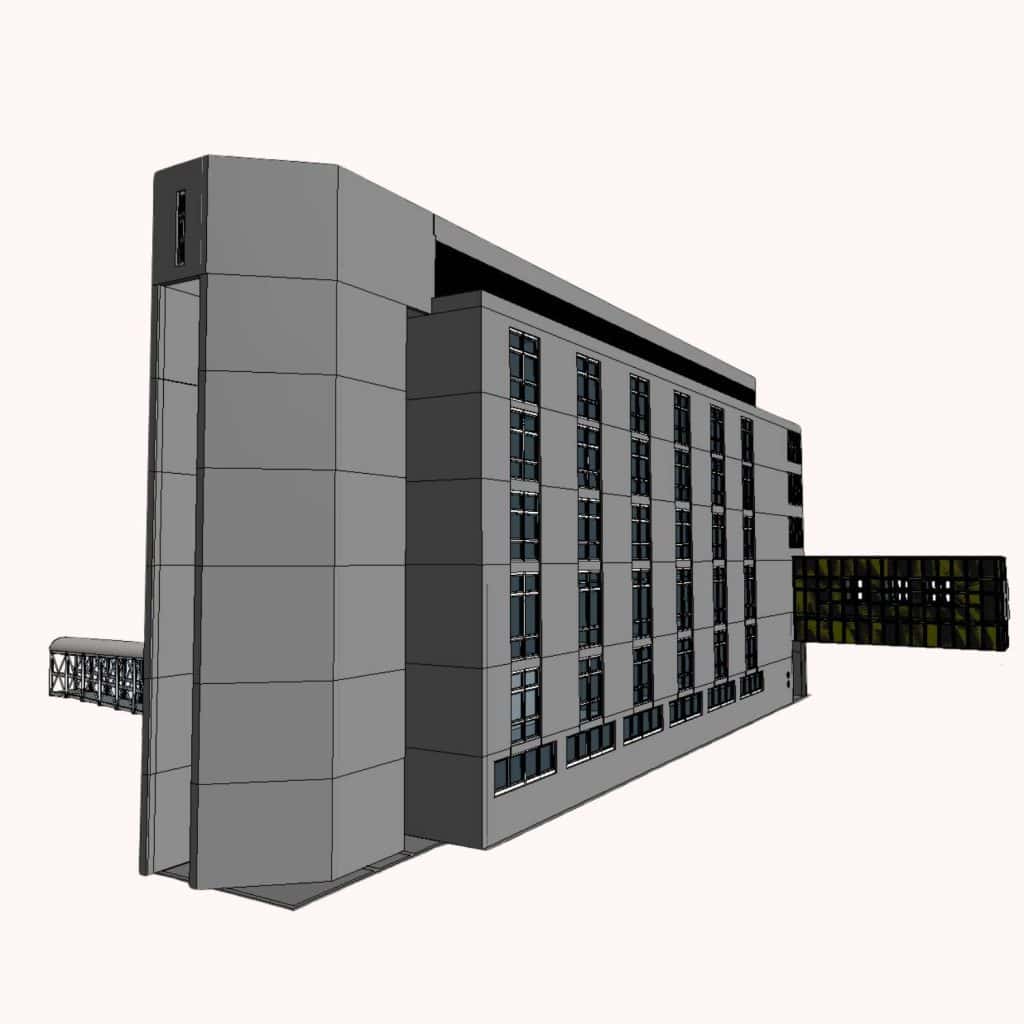
| LOD 200 | Generic geometry with approximate quantities. | Schematic design, space planning, feasibility. |
| LOD 300 | Accurate geometry with real dimensions and assemblies. | Most documentation and design-stage coordination. |
| LOD 350 | LOD 300 + interfaces and connections between systems. | Multi-trade MEP coordination. |
| LOD 400 | Fabrication-ready: detailed connections, fittings, anchors. | Clash detection, prefab, install. |
| LOD 500 | Field-verified as-built data. | Facility management, digital twin. |
How to Choose the Right LOD
Match LOD to use, not ambition. Modelling everything at LOD 400 wastes money on elements no one will ever fabricate or coordinate. Common rules of thumb:
- Early design / feasibility — LOD 200 is enough.
- Permit and construction documents — LOD 300 is the baseline.
- MEP coordination — LOD 350 for interfaces between systems.
- Fabrication / clash-critical work — LOD 400 for the elements being fabricated; lower for the rest.
- Operations — LOD 500 once the building is verified as-built.
LOD and Scan-to-BIM
The target LOD is the biggest driver of scan-to-BIM cost. LOD 200 of an open space is fast; LOD 400 of a dense, MEP-heavy facility is the most involved deliverable in the catalogue. We agree LOD upfront and apply it selectively — high LOD where it pays back, lower LOD elsewhere — to keep budgets honest without losing the value of the model.
LOD vs. Level of Detail
The names are similar but not the same. “Level of Detail” is about geometric resolution; “Level of Development” is about how reliable that geometry is for downstream decisions. LOD (Development) is the term that matters in contracts and BIM execution plans.
Need a BIM Model at the Right LOD?
simpleSCAN 3D delivers scan-to-BIM models at the exact LOD your project needs — no more, no less — built on accurate point cloud data.
Our BIM Modeling service Get a free quoteFrequently Asked Questions
What does LOD stand for in BIM?
Level of Development — the BIM Forum standard for describing how detailed and reliable each element in a model is for downstream use.
What’s the difference between LOD 300 and LOD 400?
LOD 300 has accurate geometry and dimensions suitable for documentation; LOD 400 adds the connections and fittings needed for fabrication.
Which LOD do I need for clash detection?
At least LOD 300, more typically LOD 350 — interfaces and connections matter for catching real conflicts.
Is LOD the same as Level of Detail?
No. Level of Detail refers to geometric resolution; Level of Development refers to how reliable the model element is for design and construction decisions.